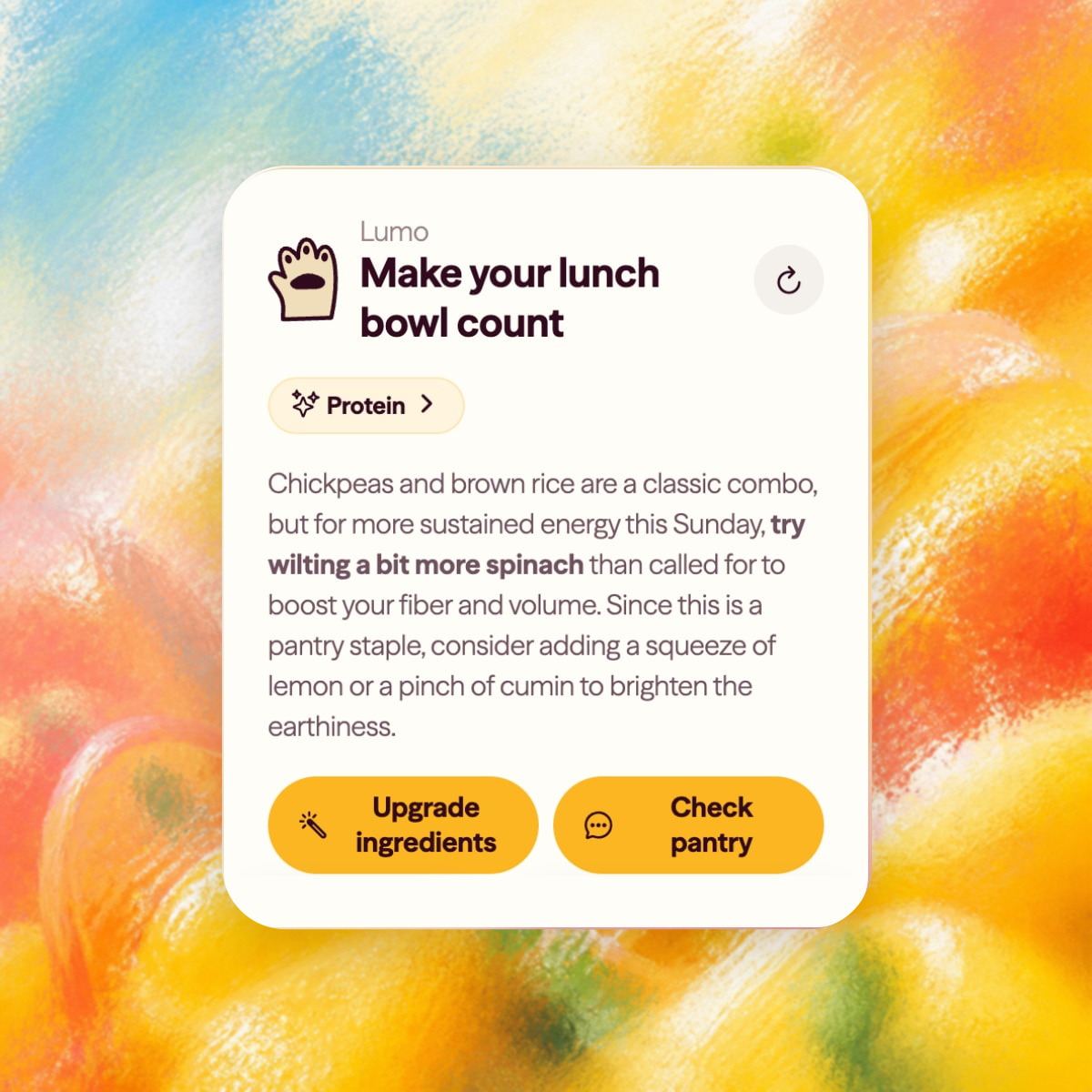
One of the themes we keep hearing from pilot testers is that guidance has to arrive in a useful shape.
Clients do not need another feed of generic tips. They need one clear nudge, enough context to trust it, and an action that fits the moment they are already in.
That is what the new coaching cards are designed to do.
The cards show up on surfaces where a client is already thinking about food, including the home screen and the recipe view. Instead of asking someone to interpret a full dashboard or hunt through settings, Lumo can surface a compact recommendation tied to the meal or pattern in front of them.
What changed
The card format now gives Lumo room to explain the why and offer useful actions. A card might point out that a recipe could use more protein, suggest an ingredient upgrade, or help the client check whether their pantry can support the change.
The important part is restraint. A coaching card should not try to teach everything. It should help the client take the next step.
Why it matters
Between-session support only works when the product feels practical. If advice feels abstract, clients ignore it. If it feels timely and small enough to act on, it can become part of the food decision they are already making.
This is the direction we are polishing with testers: sharper cards, clearer actions, and less noise around the meal experience.
More of this is coming as we keep tightening the pilot.